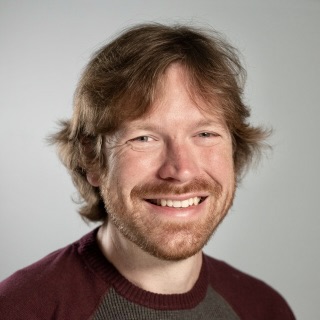
Leash Bio co-founder Ian Quigley says messy DNA-encoded library screens can yield reproducible AI training data, using dozens of barcodes per molecule and hundreds of screens per library. He says absolute binding strength is still out of reach.
Ian Quigley says co-folding models still place a molecule where a pocket was digitally destroyed, so Leash Bio engineers protein mutants for negative data. In a 20-protein exploratory analysis, its model's attention spread more evenly after retraining on mutants plus about 40% more ordinary data.
In Leash Bio's 2024 Kaggle contest, no team beat chance on an unseen chemical library. Ian Quigley says Leash's later Hermes model roughly matched Boltz on public tests without training on outside data, but published results were mixed.
Leash Bio co-founder Ian Quigley says a model given only guesses of who made each molecule, plus the target protein's identity, predicted public ChEMBL activity data nearly as well as one using structure plus the same protein. His team's preprint adds that those guesses still carry chemistry.
Ian Quigley of Leash Bio says AI agents querying its premeasured binding screens can search for strong binders within 100 picks, and argues this resists memorization better than scaling its Hermes model. Leash released a version, Minos, October 14.
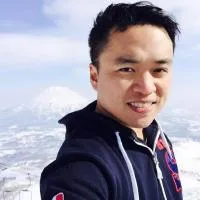
Jason Ma, Dyna Robotics' co-founder and chief scientist, says the company must own its robot hardware because of latency, human-data transfer and long supply chains. He also says wheels beat legs for now.
Dyna Robotics chief scientist Jason Ma argues that robots should predict future camera video, not only their next moves. He says the bet could fail if touch or sound makes rival models far more data-efficient.
Jason Ma, chief scientist at Dyna Robotics, says robotics has no internet of data. Dyna pretrains on a million hours of human video, adapts each task with minutes to hours of robot data, and Ma expects synthetic environments to add more.
Jason Ma, chief scientist of Dyna Robotics, says robots fold thousands of napkins daily across many Din Tai Fung locations in the US. He contrasts that with one-site pilots and says Dyna aims for hundreds of robots next year.
Dyna Robotics' Jason Ma says hour-long robot jobs such as laundry need a planning layer around the low-level action model. He names fragile robot hands, slow hardware testing and vision-only data as limits on more general work.
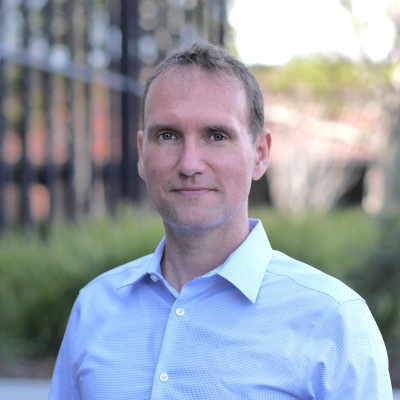
Google DeepMind's Pushmeet Kohli said scientists need models with calibrated confidence and known limits more than human-readable inner workings. Biohub's Sal Candido said protein models hold knowledge not yet unlocked.
Biohub's Sal Candido and Google DeepMind's Pushmeet Kohli argued on a panel that scaling laws in biology must be found, not assumed, and that the problem should decide whether to build better models or gather new data.
May we use a browser ID to count visits, article reading, return visits and how readers found us? The statistics stay on our server. We also count daily page totals without analytics cookies or visitor IDs.